John Beebe's 8-Function Model:Archetypes, Slots, and Shadow Functions
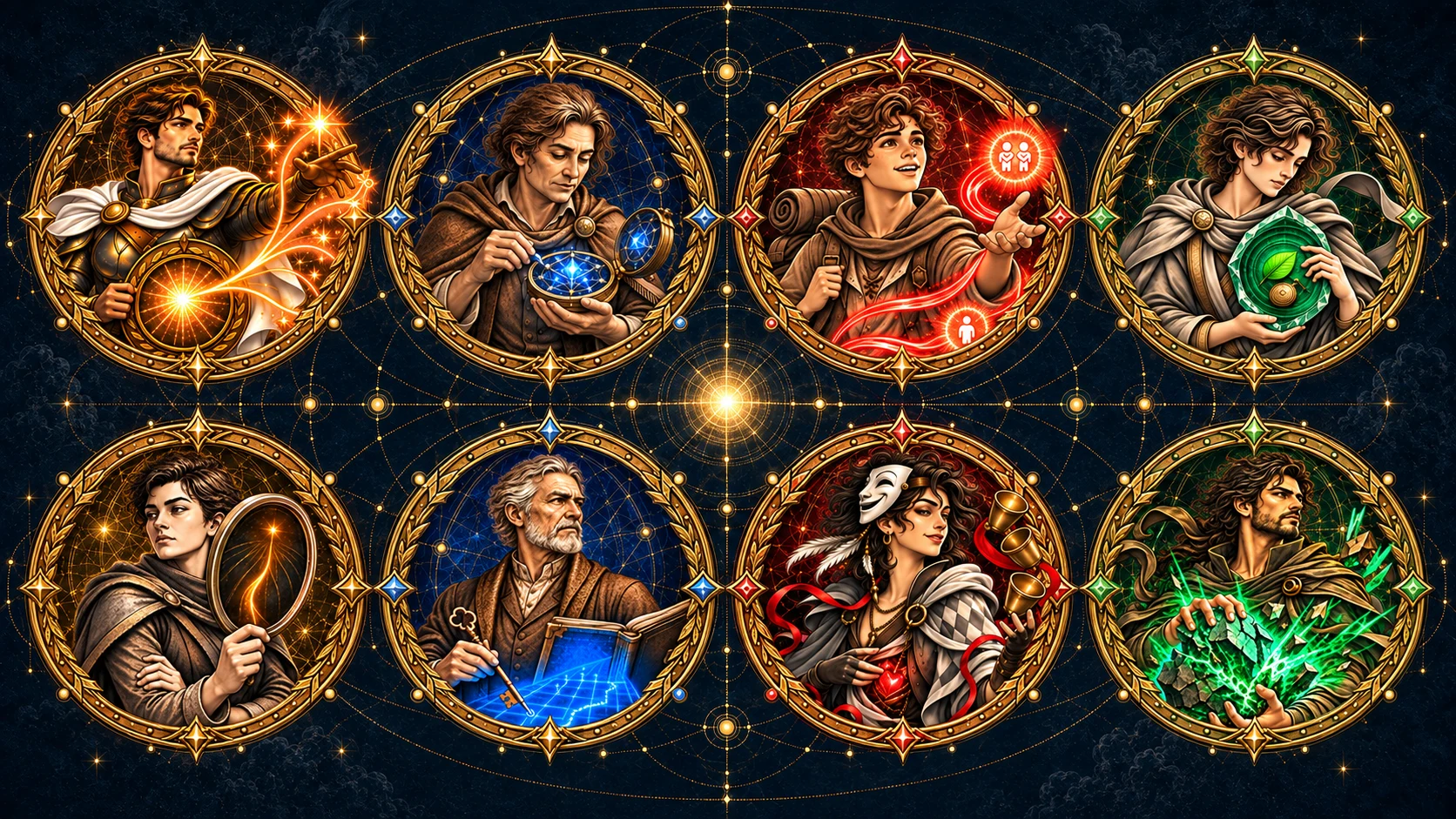
John Beebe's eight-function model pairs the eight Jungian function-attitudes with eight archetypal positions: Hero/Heroine, Father/Mother, Puer/Puella, Anima/Animus, Opposing Personality, Senex/Witch, Trickster, and Demonic/Daimonic Personality. The positions describe different roles within the psyche. They are not a ranking from the strongest function to the weakest.1
Online, the same framework is often called the Beebe stack, eight-function stack, or eight-archetype model. Those names are useful search terms, but the word stack can be misleading. Beebe describes an interacting cast of psychological complexes, not eight abilities arranged on a ladder.
This guide explains what the eight slots mean, how positions 5 through 8 are derived, how the model differs from Jung and standard Myers-Briggs type dynamics, and how each of the sixteen types is represented.
The Beebe Model at a Glance
Choose a type in the panel below to see which cognitive function occupies each archetypal position. The four rows show the model's paired structure: positions 5 through 8 use the same function families as positions 1 through 4, but reverse their introverted or extraverted attitudes.
Primary positions · 1–4
ENTP · The spine and arms of personality


Spine · 1, 4, 5, 8
Identity, integrity and relationship to self
Arms · 2, 3, 6, 7
Care, play and relating to others
Shadow counterparts · 5–8
ENTP · The same functions, in the opposite attitude

View all 16 eight-function stacks
Select a type name to inspect it in the interactive stack above. The divider separates primary positions 1–4 from shadow positions 5–8.
| Type | ||||||||
|---|---|---|---|---|---|---|---|---|
| Si | Te | Fi | Ne | Se | Ti | Fe | Ni | |
| Si | Fe | Ti | Ne | Se | Fi | Te | Ni | |
| Ni | Fe | Ti | Se | Ne | Fi | Te | Si | |
| Ni | Te | Fi | Se | Ne | Ti | Fe | Si | |
| Ti | Se | Ni | Fe | Te | Si | Ne | Fi | |
| Fi | Se | Ni | Te | Fe | Si | Ne | Ti | |
| Fi | Ne | Si | Te | Fe | Ni | Se | Ti | |
| Ti | Ne | Si | Fe | Te | Ni | Se | Fi | |
| Se | Ti | Fe | Ni | Si | Te | Fi | Ne | |
| Se | Fi | Te | Ni | Si | Fe | Ti | Ne | |
| Ne | Fi | Te | Si | Ni | Fe | Ti | Se | |
| Ne | Ti | Fe | Si | Ni | Te | Fi | Se | |
| Te | Si | Ne | Fi | Ti | Se | Ni | Fe | |
| Fe | Si | Ne | Ti | Fi | Se | Ni | Te | |
| Fe | Ni | Se | Ti | Fi | Ne | Si | Te | |
| Te | Ni | Se | Fi | Ti | Ne | Si | Fe |
Introverted types
- Primary 1–4Si1 HeroTe2 ParentFi3 ChildNe4 AnimaShadow 5–8Se5 OpposeTi6 CriticFe7 TrickNi8 Demon
- Primary 1–4Si1 HeroFe2 ParentTi3 ChildNe4 AnimaShadow 5–8Se5 OpposeFi6 CriticTe7 TrickNi8 Demon
- Primary 1–4Ni1 HeroFe2 ParentTi3 ChildSe4 AnimaShadow 5–8Ne5 OpposeFi6 CriticTe7 TrickSi8 Demon
- Primary 1–4Ni1 HeroTe2 ParentFi3 ChildSe4 AnimaShadow 5–8Ne5 OpposeTi6 CriticFe7 TrickSi8 Demon
- Primary 1–4Ti1 HeroSe2 ParentNi3 ChildFe4 AnimaShadow 5–8Te5 OpposeSi6 CriticNe7 TrickFi8 Demon
- Primary 1–4Fi1 HeroSe2 ParentNi3 ChildTe4 AnimaShadow 5–8Fe5 OpposeSi6 CriticNe7 TrickTi8 Demon
- Primary 1–4Fi1 HeroNe2 ParentSi3 ChildTe4 AnimaShadow 5–8Fe5 OpposeNi6 CriticSe7 TrickTi8 Demon
- Primary 1–4Ti1 HeroNe2 ParentSi3 ChildFe4 AnimaShadow 5–8Te5 OpposeNi6 CriticSe7 TrickFi8 Demon
Extraverted types
- Primary 1–4Se1 HeroTi2 ParentFe3 ChildNi4 AnimaShadow 5–8Si5 OpposeTe6 CriticFi7 TrickNe8 Demon
- Primary 1–4Se1 HeroFi2 ParentTe3 ChildNi4 AnimaShadow 5–8Si5 OpposeFe6 CriticTi7 TrickNe8 Demon
- Primary 1–4Ne1 HeroFi2 ParentTe3 ChildSi4 AnimaShadow 5–8Ni5 OpposeFe6 CriticTi7 TrickSe8 Demon
- Primary 1–4Ne1 HeroTi2 ParentFe3 ChildSi4 AnimaShadow 5–8Ni5 OpposeTe6 CriticFi7 TrickSe8 Demon
- Primary 1–4Te1 HeroSi2 ParentNe3 ChildFi4 AnimaShadow 5–8Ti5 OpposeSe6 CriticNi7 TrickFe8 Demon
- Primary 1–4Fe1 HeroSi2 ParentNe3 ChildTi4 AnimaShadow 5–8Fi5 OpposeSe6 CriticNi7 TrickTe8 Demon
- Primary 1–4Fe1 HeroNi2 ParentSe3 ChildTi4 AnimaShadow 5–8Fi5 OpposeNe6 CriticSi7 TrickTe8 Demon
- Primary 1–4Te1 HeroNi2 ParentSe3 ChildFi4 AnimaShadow 5–8Ti5 OpposeNe6 CriticSi7 TrickFe8 Demon
The diagram is a map of relationships, not a personality verdict. A function can be familiar in one situation, defensive in another, and capable of further differentiation over time. Even the terms ego-syntonic and ego-dystonic describe a tendency in how a position is experienced, not a permanent division between everything conscious and everything unconscious.2
Function, Position, and Archetype Are Different Things
Three layers are often compressed into one chart:
- A function is sensing, intuition, thinking, or feeling.
- An attitude is introversion or extraversion.
- An archetypal position describes the characteristic role through which a function-attitude enters the personality.
Combining function and attitude produces the familiar eight abbreviations: Se, Si, Ne, Ni, Te, Ti, Fe, and Fi. Beebe's model does not turn these into eight fixed archetypes. It proposes that each function-attitude takes on a different archetypal role depending on the person's type.
For an ENTP, for example, Ne occupies the Hero/Heroine position and Se occupies the Demonic/Daimonic position. For an ESFP, those same function-attitudes appear in different positions: Se is Hero/Heroine, while Ne is Senex/Witch.
If the function abbreviations are unfamiliar, begin with the visual guide to the eight Jungian cognitive functions.
The Eight Archetypal Positions
Beebe's names draw on Jungian archetypal language. They point toward recurring patterns of motivation, vulnerability, relationship, and defense.
1. Hero/Heroine: the Dominant Function
 The first position is associated with the dominant function and with the part of the personality most ready to meet the world through competence, initiative, and a recognizable conscious standpoint. This is where a person may feel called to solve problems, take responsibility, or demonstrate mastery.
Its constructive expression is confidence and reliable engagement. Its defensive expression can be inflation: identifying so completely with one favored way of perceiving or judging that other forms of intelligence are discounted.
2. Father/Mother: the Auxiliary Function
 The second position is associated with the auxiliary function. Beebe calls its archetype Father/Mother; Parent or Good Parent are common later aliases. It often carries the impulse to protect, teach, guide, or create conditions in which another person can develop.
Constructively, it gives the dominant function balance and social usefulness. Defensively, guidance can harden into unsolicited instruction, rescuing, or the assumption that one already knows what another person needs.
3. Puer/Puella: the Tertiary Function
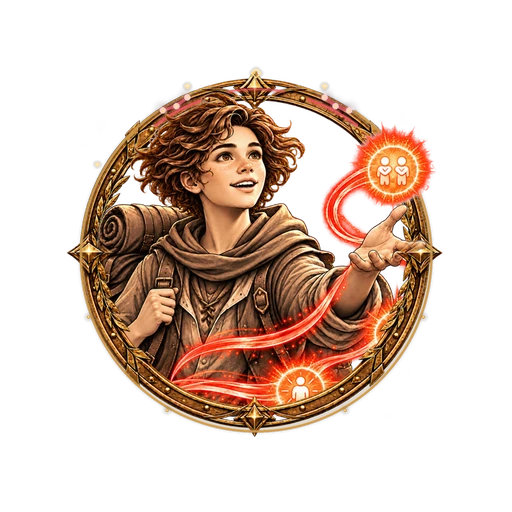 The third position is Beebe's Puer/Puella, often called the Child or Eternal Child online. It can bring play, improvisation, renewal, charm, and openness to being helped. It may also hold a less stable or more easily wounded form of the function.
The Child position is not simply childishness. Its vulnerability can preserve spontaneity and imagination that a competent adult identity has learned to suppress. Under pressure, however, it may seek special treatment, evade responsibility, or retreat into a familiar comfort.
4. Anima/Animus: the Inferior Function
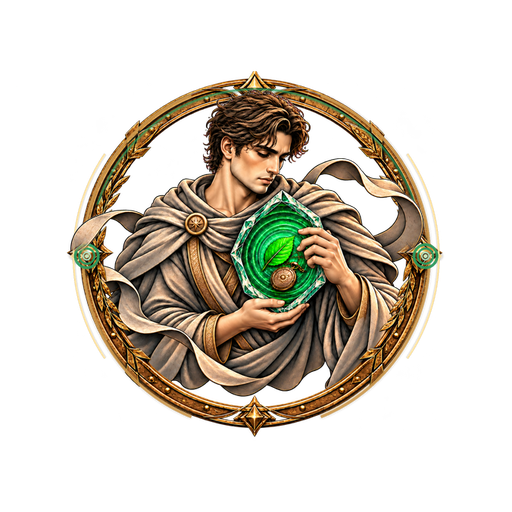 The fourth position is associated with the inferior function and with what Beebe calls the Anima/Animus. It can feel alluring, embarrassing, overwhelming, or mysteriously important because it challenges the dominant identity while opening a relationship to psychological otherness.
The names come from the gendered language of historical analytical psychology. Contemporary readers need not reduce the position to a literal inner woman in a man or inner man in a woman. The durable idea is that the inferior function can mediate an encounter with qualities the conscious personality does not readily recognize as its own.
Constructively, this position can deepen humility, relationship, creativity, and a sense of vocation. Defensively, it may appear through idealization, projection, touchiness, or sudden loss of proportion.
5. Opposing Personality: the Dominant Function's Counterpart
 The fifth position contains the same function family as the dominant function but reverses its attitude. If position 1 is Ne, position 5 is Ni; if position 1 is Ti, position 5 is Te. Opposing Role and Nemesis are common online aliases, though Opposing Personality is Beebe's term.
This position may become constellated when the Hero/Heroine feels obstructed, controlled, or opposed. It can dig in, refuse, counterattack, or protect autonomy. Yet resistance is not inherently pathological. The position can expose the dominant function's blind spots and supply a necessary refusal when conscious confidence has become one-sided.
6. Senex/Witch: the Auxiliary Function's Counterpart
 The sixth position reverses the attitude of the auxiliary function. Beebe calls it Senex/Witch; Critical Parent is a widely used later label. Its difficult expression can discourage, shame, freeze, or impose a standard that no one can satisfy. It often appears when the personality feels that its authority, care, or social competence has failed.
But the Senex/Witch is not only a punitive voice. At its best, the position can set sober limits, identify what cannot be sustained, and offer hard-won wisdom without pretending that every possibility should remain open.
7. Trickster: the Tertiary Function's Counterpart
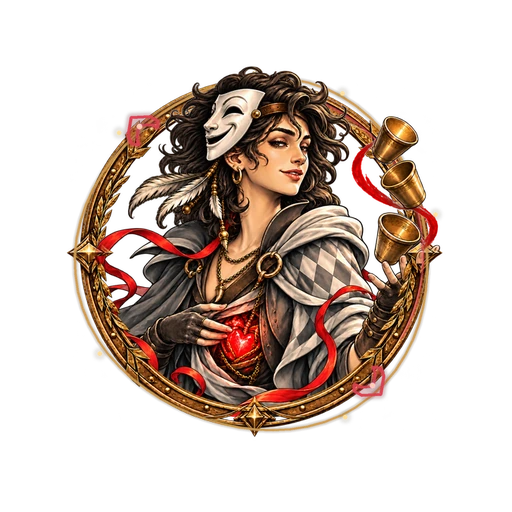 The seventh position reverses the attitude of the tertiary function. The Trickster is associated with paradox, reversals, double binds, and escapes from situations in which every available choice seems compromising.
Defensively, it can trap another person in contradictory rules, change the terms of an argument, or evade accountability through cleverness. Constructively, the same pattern can reveal a false dilemma, puncture inflated seriousness, and create an unexpected exit from a rigid system.
8. Demonic/Daimonic Personality: the Inferior Function's Counterpart
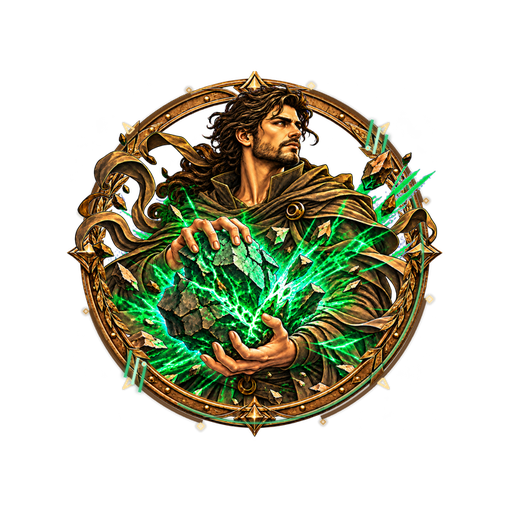 The eighth position reverses the attitude of the inferior function. Beebe uses the paired language Demonic/Daimonic Personality to preserve both destructive and potentially transformative meanings. Demon and Daimon are common shortened forms.
This position may be experienced as alien, undermining, or catastrophic when the integrity of the personality feels threatened. It can attack what the conscious self most values, including the self itself. But daimonic also points toward a force that can break an exhausted organization of personality and demand a more complete form of life.
Eight roles. Eight ways of seeing.
Explore how a cognitive function takes shape through an archetypal role.

Child × Si
Subjective impressions of familiar experiences become a source of play, reassurance, and renewal. Revisiting a texture, routine, or remembered detail offers a personal world to explore, rather than a rule that everyone must follow.
Constructive expression
Recreates a valued experience with affectionate attention to how it feels, noticing small variations that make a familiar activity newly enjoyable and sharing that delight without demanding an exact replica.
Under strain
When novelty feels exposing, may insist that a comforting experience happen exactly as remembered, making reassurance depend on details that other people cannot reliably reproduce.
In everyday life
Cooks a childhood recipe and enjoys rediscovering its smell and texture. An unavailable ingredient can invite a playful variation, or feel unexpectedly upsetting when the meal is carrying a need for comfort.
The Spine and the Arms
Beebe arranges the eight archetypal roles as two crosses, each with a vertical spine and horizontal arms.2
The spine: identity and integrity
The spine connects the Hero/Heroine and Anima/Animus with their counterparts, the Opposing Personality and Demonic/Daimonic Personality. It concerns our sense of who we are, what holds us together, and how we encounter parts of ourselves that feel unfamiliar or difficult to accept.
The arms: care and connection
The arms connect the Father/Mother and Puer/Puella with their counterparts, the Senex/Witch and Trickster. They concern how we relate to others: offering guidance, giving and receiving care, playing, setting limits, and becoming caught in interpersonal tensions.
Are Positions 5 Through 8 the Shadow Functions?
They are commonly called the shadow functions, and Beebe describes them as more ego-dystonic counterparts to the first four.
In Jungian psychology, shadow names material that the conscious personality has difficulty recognizing as its own. Any function can be used destructively, and any archetypal position can become inflated or defensive. Likewise, an encounter with an ego-dystonic function can correct one-sidedness, enlarge awareness, or make a previously unavailable response possible.
The lower four positions are therefore better understood as forms of experience that are harder for the ego to own and regulate. They may arrive with greater projection, compulsion, affect, or interpersonal conflict.
Beebe, Jung, and Myers-Briggs Are Not the Same Model
Carl Jung supplied the foundational language of four functions, two attitudes, conscious differentiation, compensation, and archetypal psychology. Central to his account is the compensatory relationship between consciousness and the unconscious: what the conscious attitude emphasizes can leave other perspectives insufficiently represented, and the unconscious brings those neglected tendencies into play.
In Psychological Types, Jung describes an extraverted conscious attitude as compensated by an introverted tendency in the unconscious, and an introverted conscious attitude by an extraverted tendency. Compensation can supplement and balance the conscious standpoint; when that standpoint becomes excessively one-sided, the relationship can become more forcefully oppositional.3
Beebe’s shadow positions can be understood as a later elaboration of this broader Jungian principle. By pairing each of the first four function-attitudes with its opposite-attitude counterpart, his model gives a more specific archetypal structure to encounters with perspectives the ego finds harder to recognize as its own. Jung did not publish this particular eight-position arrangement, but his account of unconscious compensation provides an important foundation for understanding it.
The Myers-Briggs tradition developed the sixteen four-letter types and the familiar dominant, auxiliary, tertiary, and inferior sequence. Beebe then associated eight function-attitudes with eight archetypal complexes and developed the double-cross arrangement through self-analysis, dreams, clinical observation, and decades of theoretical work.1
How the theory developed
Foundations → Type dynamics → Archetypal roles
Jung
4 functions · 2 attitudes
Myers-Briggs
16 types · Four-function sequences
Beebe
8 archetypal roles
ENTP example
That history matters for two reasons. First, it helps distinguish Jung’s original ideas from later interpretations and terminology. Second, it keeps the model's evidentiary status clear. Beebe's framework is an interpretive model from analytical psychology.4
Using the Model for Reflection
The model becomes useful when you connect its patterns to a particular experience. Start with a moment of confidence, care, play, uncertainty, or conflict. What were you attending to, and what mattered to you? Were you trying to understand something, protect a relationship, uphold a standard, or find a way out of a difficult situation?
Then explore how the function and archetypal role work together. The same search for clarity might support patient guidance in one moment and become severe criticism in another. Comparing constructive expression with expression under strain can help you recognize what a response makes possible, where it becomes restrictive, and what another approach might offer.
Frequently Asked Questions
What are the eight Beebe archetypes?
They are Hero/Heroine, Father/Mother, Puer/Puella, Anima/Animus, Opposing Personality, Senex/Witch, Trickster, and Demonic/Daimonic Personality. Parent, Eternal Child, Critical Parent, Nemesis, and Demon are common online labels, but not all are Beebe's original terminology.
What is an eight-function or Beebe stack?
It is a mapping of all eight function-attitudes to Beebe's eight archetypal positions for one personality type. Positions 1 through 4 follow the dominant, auxiliary, tertiary, and inferior stack; positions 5 through 8 mirror those function families in the opposite attitudes.
How does the ordering relate to conscious and unconscious functions?
The ordering matters, but it does not describe a simple progression from strongest to weakest across all eight functions. Within the conscious pattern, the dominant, auxiliary, tertiary, and inferior positions conventionally indicate decreasing differentiation: how clearly a function is developed, distinguished from other functions, and available for deliberate use.
Positions 5–8 describe the unconscious counterparts and their archetypal roles, rather than four further steps down that same scale. An unconscious function may be active, influential, or associated with considerable skill without being equally integrated into conscious awareness. Differentiation, frequency of use, and measured ability are related but distinct.
Are the fifth through eighth functions always negative?
No. They may be more difficult to recognize and regulate, especially when activated defensively, but each can also reveal blind spots or carry a corrective and transformative possibility.
What is the difference between the Parent and Critical Parent?
The Parent tends to express care through support, guidance, and practical responsibility. It draws on a familiar way of understanding situations to help others develop confidence and competence.
The Critical Parent brings a more demanding, corrective form of judgment. It notices shortcomings, questions assumptions, and sets limits. Constructively, this can offer discernment and hard-won wisdom; under strain, it can become fault-finding, shaming, or impossible to satisfy.
Both can express care and authority. The difference is often in how that care is delivered: the Parent helps someone meet a challenge, while the Critical Parent scrutinizes what needs to change.
Is the eighth function always a Demon?
The eighth position is named Demonic/Daimonic Personality in Beebe's model. The name identifies an archetypal potential, not a permanent behavior or moral character. The paired wording deliberately leaves room for both destructive and transformative expressions.
Is Beebe's model part of official MBTI theory?
It is a later Jungian development that uses the function ordering associated with Myers-Briggs type dynamics. It should not be confused with the MBTI assessment itself or presented as a model originally published by Isabel Briggs Myers.
Can I determine my Beebe stack from my four-letter type?
Yes, if you are using the same type-dynamics convention. Select a type in the interactive reference above to see all eight positions. If the underlying four-letter type is uncertain, treat the resulting stack as one hypothesis rather than a settled identity.